
 Mon-Fri 5:00 – 7:00 PM Sat 3:00 – 5:00 PM
 Nov 27, 2025
 Dr Vaidehi
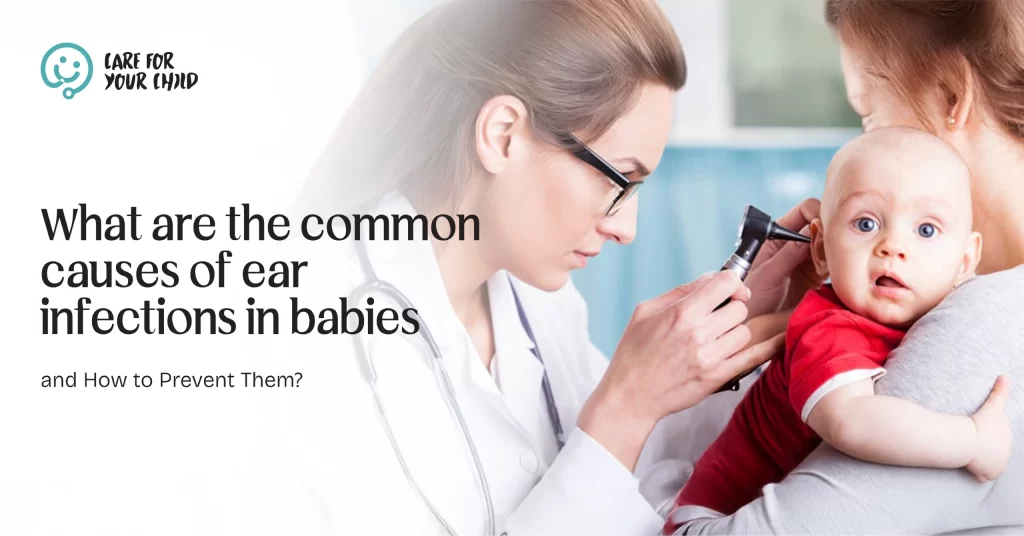
It often starts with a small sign: your baby tugging at their ear, fussing during feeds or struggling to sleep. Ear infections are one of the most common reasons parents visit a paediatrician, especially within the first three years of life. To support your baby’s comfort and reduce repeat infections, it helps to understand what causes ear infections in babies and what practical steps you can take to prevent them.
As we explore these causes, we will also look at simple ways to keep your baby’s ears healthy.
This blog provides general information only and should not replace a medical consultation. Always speak to your paediatrician if you are concerned about your baby’s symptoms or feeding habits.
Why Babies Are More Prone to Ear Infections
To understand why ear infections in babies are so common, it helps to know how the ear works.
Babies have a small passage inside the head called the Eustachian tube. This tube connects the middle ear to the back of the throat and helps drain fluid. In adults, this tube sits at a steeper angle and is longer, which allows fluid to drain easily. In babies, the tube is:
- Shorter
- Narrower
- Positioned more horizontally
This structure makes it harder for fluid to drain, especially during a cold. When fluid builds up, it can become trapped, increasing the chance of infection.
Babies also have an immature immune system. They cannot yet fight off infections (like colds) as effectively as older children. The WHO notes that most children will experience at least one ear infection by the age of three.
5 Common Causes of Ear Infections in Babies
Here are the most frequent reasons why babies get ear infections.
1. Colds and Upper Respiratory Infections
This is the most common cause. When a baby has a cold, the nose and throat produce extra mucus. This mucus can block the Eustachian tube, preventing fluid from draining. Once fluid is trapped, bacteria or viruses can grow inside the middle ear.
2. Allergies and Nasal Congestion
Allergies can cause swelling in the nose and throat, making drainage more difficult. The Indian Academy of Paediatrics notes that children with allergic rhinitis may experience ear problems more often.
3. Secondhand Smoke Exposure
Research states that babies exposed to cigarette smoke have a higher risk of ear infections. Smoke irritates the inner lining of the Eustachian tube, making it harder for it to function properly.
4. Group Childcare Settings
Babies in nurseries or day-care settings catch more colds because they are exposed to other children. More colds mean more chances for ear infections to develop.
5. Feeding Position
Parents often ask, does feeding a baby lying down cause ear infections?
Feeding in a completely flat position can increase the risk because gravity does not help milk flow safely down the throat. Instead of draining smoothly, milk may linger at the back of the throat near the Eustachian tube opening.
This does not mean milk enters the ear, but flat feeding can make it harder for the throat and tube to clear properly.
Can Teething Cause Ear Infections in Babies?
Many parents wonder whether teething is responsible. The short answer is no, teething does not directly cause an ear infection.
However, teething can mimic or worsen symptoms because:
- Pain from gums can spread to the ears.
- Babies dribble more, which can lead to mild congestion.
- Many babies put objects in their mouths during teething, increasing exposure to germs.
According to study, teething may cause mild discomfort or low-grade temperature, but not true infection.
How Feeding Practices Affect Ear Health
Parents often ask why babies get ear infections after certain feeding habits. Feeding position plays an important role.
Safe feeding position to reduce risk
When feeding your baby, especially with a bottle:
Step-by-step safe position:
- Hold your baby so their head and shoulders are above the level of their tummy.
- Their body should be supported at around a 30 to 45 degree angle.
- Keep your arm behind their back and their head resting in the crook of your elbow.
- Ensure the bottle is tilted so milk fills the teat completely.
- After feeding, keep your baby upright for 10 to 15 minutes.
This position helps milk move smoothly down the throat and reduces the chance of pooling.
Bottle feeding vs breastfeeding
Breastfeeding is protective because breast milk contains antibodies that help the immune system. According to research, breastfed babies tend to have fewer ear infections overall. If bottle feeding, the main goal is simply to avoid flat feeding and never prop the bottle.
Pacifiers
Some studies show a small increase in ear infections with frequent dummy use after six months. Limiting pacifier use may be helpful.
Practical Prevention Strategies for Parents
Here are 7 tips to reduce ear infections in babies:
1. Keep vaccinations up to date.
Vaccines such as the pneumococcal vaccine help prevent infections that can lead to ear problems.
2. Wash hands regularly.
Good hygiene reduces the spread of colds, which are the main trigger.
3. Maintain a smoke-free environment.
Avoid any exposure to cigarette smoke.
4. Manage nasal congestion early.
Saline drops and gentle suction can help babies breathe more easily.
5. Feed in an upright position.
Avoid feeding while your baby is lying flat.
6. Breastfeed if possible.
Even partial breastfeeding provides immune support.
7. Regular paediatric check-ups
Your paediatrician can spot early signs of recurrent infections or fluid build-up.
Conclusion
Ear infections in babies are common because their immune system is still developing and their ear structure makes it easier for fluid to get trapped. Everyday factors such as colds, allergies, smoke exposure and certain feeding habits contribute to the common causes of ear infections. Understanding what causes ear infections in babies helps parents take simple, effective steps to reduce discomfort. Keeping your baby upright during feeds, avoiding smoke exposure, managing congestion early and staying up-to-date with vaccinations all support healthier ears.
If you are concerned about why your baby gets ear infections often or notice repeated symptoms such as irritability, poor sleep or difficulty feeding, a paediatric review can be reassuring. Dr Vaidehi Dande provides gentle, parent-focused care and clear guidance on the causes of ear infections and how to prevent them. If you would like personalised support for your baby’s ear health, her clinic in South Mumbai is always ready to help you feel confident and supported.
References
- Brown, C. E., & Magnuson, B. (2000). On the physics of the infant feeding bottle and middle ear sequela: Ear disease in infants can be associated with bottle feeding. International Journal of Pediatric Otorhinolaryngology, 54(1), 13–20. https://doi.org/10.1016/s0165-5876(00)00330-x
- Casale, J., Shumway, K. R., & Hatcher, J. D. (2025). Physiology, Eustachian tube function. In StatPearls. StatPearls Publishing. https://www.ncbi.nlm.nih.gov/books/NBK532284/
- de Sévaux, J. L., Venekamp, R. P., Lutje, V., Hak, E., Schilder, A. G., Sanders, E. A., & Damoiseaux, R. A. (2020). Pneumococcal conjugate vaccines for preventing acute otitis media in children. Cochrane Database of Systematic Reviews, 11, CD001480. https://doi.org/10.1002/14651858.CD001480.pub6
- InformedHealth.org. (2022). Middle ear infection: Learn more – How can middle ear infections in children be prevented? Institute for Quality and Efficiency in Health Care (IQWiG). https://www.ncbi.nlm.nih.gov/books/NBK279382/
- Lieu, J. E., & Feinstein, A. R. (2002). Effect of gestational and passive smoke exposure on ear infections in children. Archives of Pediatrics & Adolescent Medicine, 156(2), 147–154. https://doi.org/10.1001/archpedi.156.2.147
- National Institute on Deafness and Other Communication Disorders. (2022, March 16). Ear infections in children. U.S. Department of Health and Human Services, National Institutes of Health. https://www.nidcd.nih.gov/health/ear-infections-children
- Sidam, S., P, A. M., Khurana, U., Gupta, V., & Bhan, B. D. (2023). Evaluation of the association between allergic rhinitis and middle ear dysfunction: A clinicopathological study. Cureus, 15(6), e40913. https://doi.org/10.7759/cureus.40913
- Yousif, M. K. (2020). Mothers’ false beliefs and myths associated with teething. Qatar Medical Journal, 2020(2), 32. https://doi.org/10.5339/qmj.2020.32
