
 Mon-Fri 5:00 – 7:00 PM Sat 3:00 – 5:00 PM
 Dec 22, 2025
 Dr Vaidehi
Seasonal allergies can quickly turn a beautiful spring or fall day into a frustrating experience for children. If your child starts sneezing, rubbing their eyes, or feeling congested around the same time each year, seasonal allergies are likely the cause. Many parents want to know how to help a child with seasonal allergies, and fortunately, there are several effective ways to reduce symptoms and bring relief.
Whether you’re trying to understand seasonal allergies in kids or you’re concerned about baby seasonal allergies, this guide will help you take clear, confident steps to keep your little one comfortable throughout allergy season.
This article is for general educational purposes only, and it is not a substitute for professional medical advice, diagnosis, or treatment. Always consult your paediatrician or a qualified healthcare provider with any questions regarding your baby’s health.
What Are Allergens?
Allergens are tiny particles in the air that can trigger allergy symptoms in some children. These include pollen, dust mites, mold, and pet dander. When a child with allergies breathes these particles in, the immune system reacts as if they are harmful.
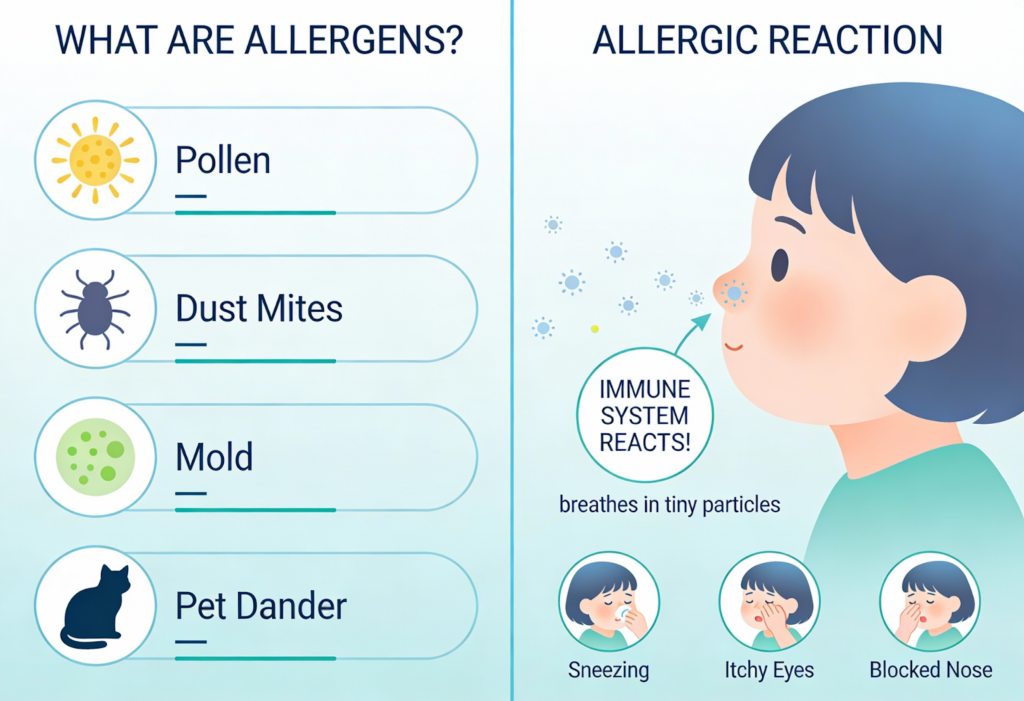
This reaction leads to sneezing, itchy eyes, or a blocked nose. Pollen is one of the most common allergens during certain seasons. Dust and mold can bother children all year. Understanding these allergens makes it easier to recognise what is triggering your child’s symptoms and how to reduce their exposure.
Seasonal Allergies in Kids
Seasonal allergies happen when things in the air, like dust, pollen, or mold, bother your child’s immune system. The body thinks these particles are harmful and reacts with sneezing, itchy eyes, or a blocked nose. Pollen is a common trigger. It is a tiny powder released by trees and plants, and when children breathe it in, it can irritate their nose, eyes, and throat.
Common triggers include:
- Tree pollen: Comes from trees during spring (Feb-April).
- Grass pollen: It comes from grasses during the summer (April-June).
- Weed pollen: Mainly from Parthenium/Congress grass during autumn (Aug-Nov).
- Mold: Grows in damp places, especially during monsoon.
- Dust mites: Tiny insects that live in soft items like bedsheets, pillows, mattresses, and soft toys, present all year but worse in humid weather.
Symptoms of Seasonal Allergies in Kids
- Sneezing: Babies with seasonal allergies may sneeze repeatedly as their nose reacts to pollen, dust, or other airborne allergens.
- Runny or stuffy nose: Allergies can cause a constantly runny nose or nasal blockage, making it harder for a child to breathe comfortably.
- Itchy, watery eyes: Toddlers and kids may have itchy, irritated eyes that water due to allergen exposure.
- Postnasal drip: Mucus may drip down the back of the throat, leading to discomfort or a tickling sensation.
- Coughing: Some children cough to clear throat irritation caused by postnasal drip or allergens.
- Tiredness: Seasonal allergies in kids can disturb sleep, leaving them feeling tired during the day.
- Irritability: Ongoing discomfort from blocked nose, itchy eyes, or poor sleep can make children cranky or easily upset.
If the symptoms repeat every year around the same season, it’s more likely allergies than a cold.
Diagnosis of Seasonal Allergies in Kids
Seasonal allergies are usually diagnosed by observing your child’s symptoms and noticing when they appear. A paediatrician will check your child’s medical history, daily environment, and possible triggers to understand the root cause.
Tests a paediatrician may suggest:
- Skin prick test: A small amount of allergen is placed on the skin to check for a reaction.
- Blood test: Measures allergy-related antibodies in the blood.
- Symptom pattern review: Helps match your child’s symptoms to pollen seasons.
- Environmental assessment: Checks for indoor triggers like dust, mold, or pets.
These tests are safe for children and help identify the exact allergens causing your child’s symptoms. With guidance from a paediatrician specialising in allergies, you can take the right steps to reduce triggers and start the most effective treatment plan.
How to Help a Child With Seasonal Allergies Naturally
Many parents start with natural remedies because they are gentle and safe. You can support your child by reducing allergens at home, improving their diet, and teaching simple habits that calm symptoms.
1. Simple Ways to Reduce Allergen Exposure
Small daily steps can lower your child’s contact with allergy triggers.
- Keep windows shut during pollen peaks (5 AM to 10 AM).
- Use HEPA air purifiers in bedrooms.
- Vacuum frequently with a HEPA vacuum.
- Rinse or shower your child after outdoor play.
- Avoid outdoor drying of clothes and bedsheets.
- Keep allergens away by washing hands and clothes after going outside.
- Use dust-mite-proof bedding to minimise exposure.
- Reduce pollen indoors by keeping shoes outside and cleaning surfaces often.
These steps help limit the pollen, dust, and mold that often worsen symptoms.
2. Natural Remedies That Provide Relief
Some home methods give quick comfort to children with seasonal allergies.
- Apply cool compresses or ice packs to soothe itchy eyes.
- Use saline nasal drops to clear the nose.
- Keep your child well hydrated to help thin mucus.
- Encourage warm baths to ease congestion.
- Maintain clean indoor air with purifiers and ventilation.
These gentle methods reduce irritation without medication.
3. Provide a Nutritious Diet
A strong immune system can reduce how strongly your child reacts to allergens.
Foods that help:
- Fermented foods: curd, chaas, idli, dosa, kanji
- Antioxidant-rich fruits: amla, berries, seasonal fruits
- Leafy greens: spinach, methi
- Vitamin C-rich fruits: guava, oranges, sweet lime, berries, kiwi
- Plenty of water throughout the day
These foods support gut health, immunity, and respiratory comfort.
4. Teach Kids Simple Allergy Habits
Daily habits can prevent symptoms from getting worse.
- Do not rub their eyes
- Drink water regularly
- Recognise early symptoms
- Ask an adult for help when needed
As children grow, they learn to manage symptoms more confidently.
Medical Treatments for Seasonal Allergies in Kids
If symptoms continue despite home care, paediatricians may suggest safe medical treatments. These options help children with moderate to severe seasonal allergies.
Child-Friendly Medical Treatments
- Antihistamines: Reduce sneezing, itching, and runny nose
- Nasal corticosteroid sprays: Helps decrease inflammation in the nose
- Saline nasal sprays: Clear the nose and reduce dryness
- Allergy eye drops: Help with itchy or watery eyes
- Decongestants: Sometimes used for short-term congestion relief (paediatrician guidance required)
- Allergen immunotherapy: Long-term treatment that reduces sensitivity to allergens
These treatments are chosen based on your child’s age and symptoms.
NOTE: Always check dosing guidelines, and when in doubt, consult your paediatrician before giving any medications to your child.
When to See a Paediatrician
You should seek medical advice if:
- Symptoms disrupt school or sleep.
- Your child wheezes or struggles to breathe.
- Symptoms last longer than 6 weeks.
- Over-the-counter treatments are ineffective.
A paediatrician may recommend testing to identify triggers.
Conclusion
Seasonal allergies can be uncomfortable for children, but simple steps can help. When you understand your child’s triggers and use easy home care, symptoms often improve. Healthy food, good habits, and timely medical support also make a big difference.
If symptoms continue or you need expert guidance, professional care can help. Dr Vaidehi Dande, a paediatrician with over 14 years of experience, offers gentle and specialised support for children with allergies. Her Paediatric and Allergy Clinic provides a safe and comforting space for families.
For personalised advice and the right treatment plan, book a consultation with Dr Vaidehi Dande’s Paediatric and Allergy Clinic. With the right care, your child can feel better and enjoy every season.
