
 Mon-Fri 5:00 – 7:00 PM Sat 3:00 – 5:00 PM
 Dec 11, 2025
 Dr Vaidehi
Ear infections are one of the most common reasons babies become suddenly fussy, cry more than usual, or wake up at night. This can worry any parent, especially when your baby cannot tell you what hurts. Knowing how long ear infections last in babies and what you can safely do at home helps you support your baby with confidence.
This guide explains how long infections usually last, what symptoms to look for, how to treat ear infection symptoms in babies at home, and when medical care is needed.
This article is for general educational purposes only, and it is not a substitute for professional medical advice, diagnosis, or treatment. Always consult your paediatrician or a qualified healthcare provider with any questions regarding your baby’s health or if you suspect an ear infection.
How Long Do Ear Infections Last in Babies?
Ear infections in babies usually settle faster than parents expect. As the swelling inside the ear reduces, your baby’s discomfort slowly improves. Some infections get better on their own, while others may need antibiotics. Here is a clear timeline of what typically happens.
1. Mild Ear Infections
Many babies start feeling better within 48 to 72 hours even without antibiotics.
You may notice:
- Less crying and irritability
- Better feeding
- Fewer sleep disturbances
This happens because the pressure inside the ear begins to reduce.
2. If Antibiotics Are Needed
If your paediatrician prescribes antibiotics, most babies show relief within 2 to 3 days.
The usual pattern is:
- Fever reduces first
- Ear pain decreases next
- Your baby sleeps and feeds better
Always complete the antibiotic course as advised, and always consult your paediatrician before starting any medication.
3. Leftover Fluid
Even after your baby seems better, fluid behind the eardrum can remain for several weeks. This is very common.
Important points:
- The leftover fluid does not mean the infection is still active.
- It usually does not cause pain.
- It clears on its own as the ear drains naturally.
- Your paediatrician may monitor it during follow-up visits.
Why Do Babies Get Ear Infections?
Babies are more likely to get ear infections because the tiny tube that drains the middle ear is still developing. The Eustachian tube in babies is shorter and more horizontal than in older children, which makes it easier for fluid to become trapped.
Certain things can increase the chances of an infection:
- Frequent colds
- Group daycare
- Smoke exposure
- Pacifier use
- Bottle feeding while lying flat
These factors do not directly cause infections but can make fluid buildup more likely when the baby already has a cold or nasal congestion.
Symptoms of Ear Infections in Babies
Because babies cannot tell you when their ears hurt, symptoms often show up in their behaviour. Understanding these signs helps you know how to treat a baby ear infection early.
Common signs include:
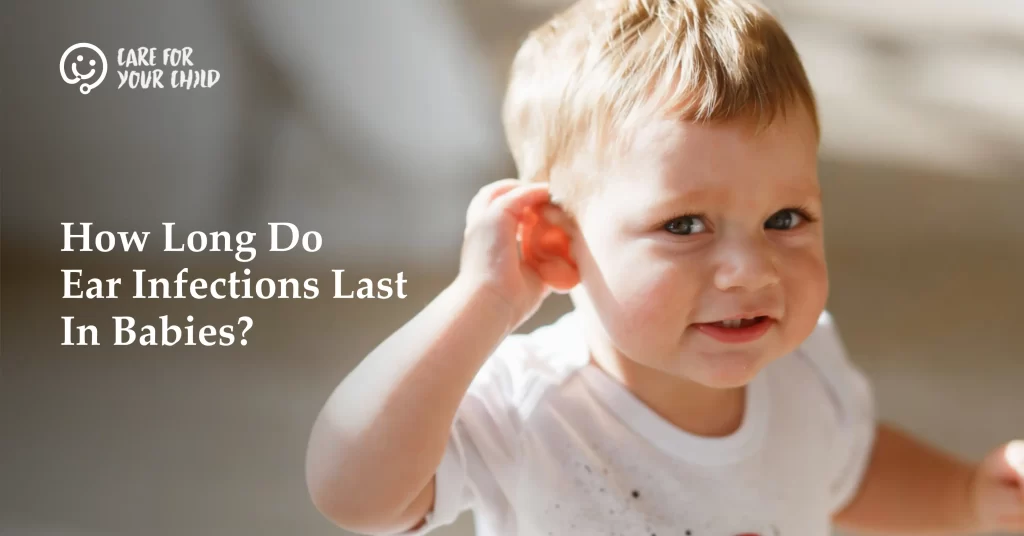
- Pulling or rubbing the ear
- Extra crying or irritability
- Trouble feeding or sleeping
- Fever
- Fluid or pus coming from the ear
- Mild balance issues
- Temporary hearing changes
Some babies do not touch their ears at all. They may simply seem uncomfortable, refuse feeds, or wake up more often at night.
How to Treat Baby Ear Infections?
The treatment for an ear infection depends mainly on your baby’s age and how strong the symptoms are. Not all ear infections need antibiotics. Many mild infections improve naturally as your baby’s body fights the infection.
To make this easier, here is how doctors usually decide:
1. If the ear infection is mild
When symptoms are mild and your baby is between 6 and 23 months, doctors may suggest a short waiting period of 2 to 3 days. This approach is called watchful waiting.
It simply means giving your baby’s body a chance to clear the infection on its own while you focus on comfort care at home.
During this time, you can use safe pain relief, warm compresses, and hydration to keep your baby comfortable. Many babies start improving during this period without needing antibiotics.
2. If your baby is younger than 6 months
Babies under 6 months have a higher risk of the infection getting worse quickly.
Because of this, doctors usually start antibiotics right away, even if symptoms are mild.
3. If symptoms are strong or not improving
Regardless of age, if your baby has:
- Persistent fever
- Strong ear pain
- Discharge from the ear
- Symptoms not improving after 2 to 3 days
In such cases, doctors may recommend antibiotics. Always consult your paediatrician first.
This ensures the infection clears properly and prevents complications.
Comfort Care at Home
While the infection heals, simple comfort measures can help your baby feel much better.
- A warm compress placed gently on the affected ear
- Keeping your baby well hydrated
- Slightly raising the head of the mattress can help with drainage, but never place pillows under the baby.
- Pain relievers (only if recommended by your paediatrician)
These steps help reduce discomfort while the infection improves.
When Are Antibiotics Needed?
Antibiotics are used when:
- Your baby is under 6 months
- Symptoms are moderate or severe
- Symptoms do not improve after watchful waiting
Younger children often need a 10-day course, while older children may need a shorter one. It is important to finish the entire course of antibiotics, even if your baby looks better before the medicine is over. This helps prevent the infection from returning.
Additional Supportive Care
These steps can also help during recovery:
- Using a humidifier to ease congestion
- Saline nasal drops to clear a blocked nose
Never put anything inside the ear unless your paediatrician recommends it.
When Should You See a Paediatrician?
Contact your paediatrician if your baby:
- Has fever or ear pain for more than 2 to 3 days
- Is younger than 6 months and shows any symptoms
- Has symptoms that are getting worse
- Has fluid, pus, or blood coming from the ear
- Seems unusually irritable or unable to sleep
- Shows signs of hearing difficulty
Timely care helps prevent complications and keeps your baby comfortable and safe.
Preventing Future Ear Infections
Some simple steps can reduce the chances of another infection:
- Breastfeed, if possible.
- Avoiding smoke exposure
- Limiting pacifier use
- Keeping vaccinations up to date
- Treating colds early
- Avoiding bottle feeding while lying flat
If your baby has repeated ear infections, your doctor may refer you to an ENT specialist. In some cases, ear tubes may be recommended.
Conclusion
Ear infections in babies can be stressful, but most improve quickly with the right care. Understanding how long ear infections last in babies, knowing the early signs, and using simple comfort measures at home can help your baby feel better while the infection settles. Some babies recover naturally within a few days, while others may need antibiotics depending on their age and symptoms. What matters most is observing your baby closely, keeping them comfortable, and seeking timely medical guidance when needed.
If you are unsure about your baby’s symptoms or want personalised guidance on how to prevent a baby ear infection safely, speaking to a paediatric specialist can provide clarity and comfort.
You may consult Dr Vaidehi Dhande, who offers gentle, child-focused care and helps parents understand the best steps to support their baby’s recovery.
